
Lídia Draskóczy
I was born in Budapest in 1973, in a family of musicians. I have been playing the violin since I was six years old. In 1991 I graduated from the Győr Conservatory of Music in violin and in 1998 from the Liszt Ferenc Academy of Music in bass viola (name of folk instrument “brácsa”).
My father was a cantor and I myself played the organ in several Reformed churches. In 2010 I founded the ecumenical choir “Csak Te” (Just You, Only You) in Nógrád county. With this family choir we performed for almost 10 years in churches, congregational occasions and village events. We have released two CDs of my own songs (“In my joy, in my sorrow” and “A lantern on the road”)
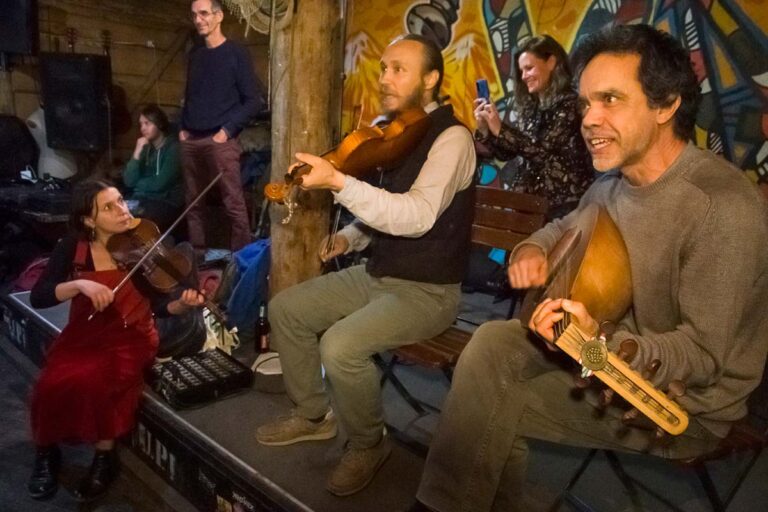
From 1993 to 2013 I was a member of the ensemble Zurgó playing “csángó” music from Moldva. Since 2013 I have been playing the violin in the ensemble Tázló. I am also a member of the children’s music group Napraforgó (Sunflower) and the world music group “HolddalaNap”.
I first visited the Csángós in Moldova (Moldva) in 1994. From then on I collected every year until the birth of my first child in 2001. I made a lot of recordings from the “data communicators” village musicians living there. There is no one living among them anymore. My recordings were printed in music publications. My first independent publication of sheet music was commissioned by the Óbuda Folk Music School (Óbudai Népzenei Iskola) in 1997.
In 1991, I was a founding member of the Corvina Consort, a renaissance music ensemble, playing the rebec and fidula until 2004. Then I joined and played for years in the medieval music ensemble Igriczek. We released two albums (“Lassan csendíjetek” and “Magyarok fénye”). We played concerts mainly in castles and festivals, but we also performed in Hungarian institutions abroad (Berlin, Prague, Paris, Brussels) and we did a one-week tour in Spain, in the Basque Country.
Currently, thanks to the invitation of the MCsMSz (Association of Csángómagyar in Moldva), I go to Moldva during summer to teach the Csángó children living there their own culture and violin melodies. For this work I was awarded the 2018 Prima Prize. As a folk musician, I was awarded the OTP Táncház Prize and the Ex Libris Prize in 2014. In recent years, I have been teaching folk violin at the Budakeszi Elementary Art School. In 2019 I was awarded the Bonis Bona Prize for my pedagogical work.
With the Tázló ensemble we organise Moldavian dance-halls and have participated in prestigious festivals abroad and in Hungary.